
Asian Clothing Manufacturing: What It Actually Delivers (And What It Doesn’t)
For decades, Asian clothing manufacturing has powered the global fashion industry. From luxury brands and sportswear giants to independent streetwear labels, millions of garments are produced across Asia every day.
Yet the phrase “Made in Asia” often oversimplifies a highly diverse manufacturing landscape. A factory producing luxury knitwear in Pakistan is very different from a mass-production facility in another country, even though both are located in Asia.
If you’re sourcing apparel for your brand, the better question isn’t “Should I manufacture in Asia?“ It’s “Which country and which factory best match the products I want to build?“
Why Asia Dominates Global Apparel Manufacturing
Asia remains the world’s largest apparel manufacturing region because it combines scale, technical expertise, and vertically integrated supply chains.
Many countries offer:
- Textile production
- Fabric knitting
- Dyeing
- Printing
- Embroidery
- Garment manufacturing
- Packaging
- Export logistics
This allows brands to develop products from raw material to finished garment within a single manufacturing ecosystem.
Not Every Asian Manufacturing Country Specializes in the Same Products
One of the biggest sourcing mistakes is assuming every Asian country offers identical capabilities.
Each has developed different strengths over time.
China
China remains one of the world’s largest manufacturing hubs, offering enormous production capacity, advanced machinery, and highly developed supply chains. It’s often a good fit for brands requiring large-scale production or technically complex garments.
Vietnam
Vietnam has earned a strong reputation for sportswear, performance apparel, and export manufacturing. Many global athletic brands source products from Vietnamese factories because of consistent quality and technical expertise.
Bangladesh
Bangladesh is well known for large-volume garment production, particularly basics, knitwear, and value-focused apparel. Many retailers rely on Bangladesh for high-volume orders.
India
India offers strong textile heritage, cotton production, embroidery, and handcrafted techniques. It is particularly attractive for brands seeking natural fibers or artisanal details.
Pakistan
Pakistan has become increasingly recognized for premium cotton products, heavyweight knitwear, fleece garments, and private-label manufacturing. Its vertically integrated textile industry allows many manufacturers to oversee spinning, knitting, dyeing, garment production, and finishing within the same supply chain.
Rather than competing solely on price, many Pakistani manufacturers now compete on product quality, flexibility, and premium customization.
What Asian Clothing Manufacturing Delivers Well
The biggest advantage is flexibility.
Brands can often access:
- Premium cotton fabrics
- Heavyweight fleece
- Low and scalable MOQs
- Advanced printing methods
- Embroidery
- Woven labels
- Private labeling
- Garment dyeing
- Custom packaging
Many factories now support startups alongside established brands, making Asia attractive for both new and growing businesses.
What Asian Clothing Manufacturing Doesn’t Automatically Deliver
Manufacturing in Asia does not automatically guarantee:
- Premium quality
- Ethical production
- Reliable communication
- Strong quality control
- Sustainable practices
Those outcomes depend entirely on the manufacturer.
Two factories located a few miles apart can produce completely different results.
That’s why evaluating capabilities is far more important than evaluating geography.
Why Pakistan Is Gaining Attention Among Premium Clothing Brands
Over the past decade, Pakistan has moved beyond being known simply as a low-cost manufacturing destination.
Today, many apparel brands choose Pakistan because of its combination of craftsmanship and textile expertise.
Some of the reasons include:
High-Quality Cotton
Pakistan is one of the world’s leading cotton producers, giving manufacturers direct access to high-quality raw materials.
Vertical Integration
Many factories control multiple production stages from yarn and fabric to dyeing, cutting, sewing, and finishing which helps improve consistency and reduce lead times.
Premium Knitwear
Pakistan has developed particular expertise in heavyweight hoodies, oversized T-shirts, sweatshirts, joggers, and other knitwear products that have become staples of modern streetwear.
Flexible Manufacturing
Many manufacturers now support startups through lower minimum order quantities while also serving established fashion brands with larger production runs.
These strengths have made Pakistan an increasingly attractive destination for brands focused on premium basics rather than mass-market fast fashion.
Quality Depends on the Manufacturer, Not the Country
One lesson experienced founders learn quickly is that country rankings only tell part of the story.
A great manufacturer is defined by:
- Consistent quality control
- Clear communication
- Transparent production
- Technical expertise
- Reliable lead times
- Product specialization
These qualities matter far more than the label on the shipping carton.
Why Integrated Manufacturing Matters
Many modern apparel brands prefer working with manufacturers that control more of the production process internally.
An integrated manufacturing model often provides:
- Better fabric consistency
- Faster sampling
- Improved quality control
- Easier customization
- Greater production visibility
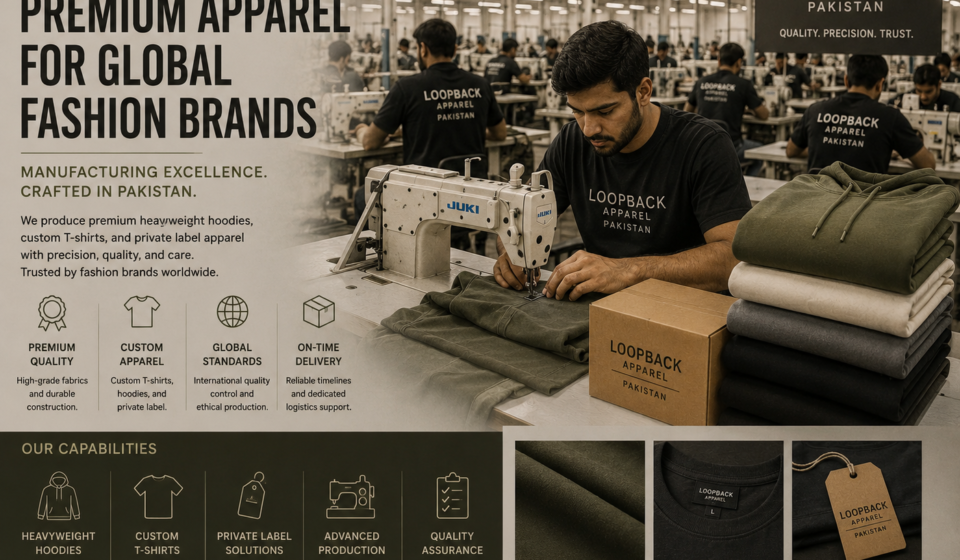
For example, manufacturers such as Loopback Apparel focus on premium cotton garments, heavyweight fabrics, private-label development, embroidery, garment dyeing, and custom finishing through an integrated production approach. For brands building premium streetwear collections, this kind of specialization can be more valuable than simply choosing a manufacturer based on geography.
Should You Manufacture in Asia?
For many brands, the answer is yes but with careful supplier selection.
Rather than asking:
“Which country is cheapest?”
Ask:
- Which factory specializes in my products?
- Can they produce consistent quality?
- Do they understand premium fabrics?
- Can they support my brand as it grows?
- Are they transparent throughout production?
These questions lead to better long-term partnerships than price comparisons alone.
Final Thoughts
Asian clothing manufacturing is far too diverse to judge as a single category. The region includes some of the world’s most advanced apparel manufacturers, along with factories that specialize in everything from luxury fashion to performance sportswear.
For brands focused on premium cotton apparel, heavyweight streetwear, and private-label production, Pakistan has emerged as a particularly compelling option. Its strong textile heritage, vertically integrated supply chain, and growing expertise in premium knitwear allow many manufacturers to compete on quality not just cost.
Ultimately, the right manufacturing decision comes down to choosing a partner whose capabilities align with your product vision. When that happens, the country becomes only one part of a much bigger success story.
FAQs
Which Asian country is best for clothing manufacturing?
There is no single best country. China excels at scale, Vietnam at technical apparel, Bangladesh at high-volume basics, India at textiles and craftsmanship, and Pakistan at premium cotton knitwear and heavyweight garments.
Why is Pakistan becoming popular for clothing manufacturing?
Pakistan combines high-quality cotton, a vertically integrated textile industry, competitive costs, and expertise in premium knitwear, making it attractive for streetwear and private-label brands.
Is manufacturing in Asia only about low costs?
No. Many manufacturers now compete on product quality, customization, technical expertise, and long-term partnerships rather than price alone.
Can startups manufacture clothing in Asia?
Yes. Many Asian manufacturers offer flexible MOQs, sampling services, and customization options that support emerging brands.
Further Reading
- How to Choose a Clothing Manufacturer in Pakistan
- Pakistan vs China vs Portugal for Clothing Manufacturing
- Luxury Blanks: What Makes a Garment Feel Truly Premium?
- Heavyweight Hoodies: What Makes Them Premium?
This style keeps the article authoritative and balanced while naturally positioning Pakistan and, by extension, manufacturers like Loopback Apparel as a strong choice for premium apparel without sounding promotional.