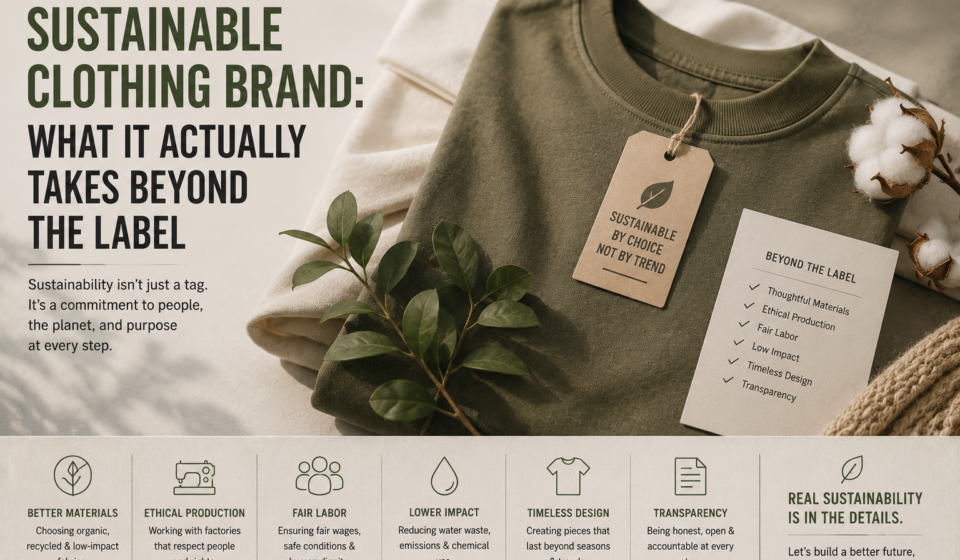

Sustainable Clothing Brand: What It Actually Takes Beyond the Label
Scroll through social media for five minutes and you’ll see hundreds of brands describing themselves as sustainable. Recycled fabric. Organic cotton. Eco-friendly packaging. Carbon-neutral shipping. The label appears everywhere.
The problem is that a sustainable clothing brand is not created by a single material, certification, or marketing claim. Real sustainability is a system. It touches sourcing, manufacturing, product quality, labor practices, packaging, and even how long a garment stays in someone’s wardrobe before being replaced.
For founders entering fashion today, that distinction matters. Customers are becoming better informed, and regulators are paying closer attention to environmental claims. The brands that build trust are the ones willing to look beyond the label and focus on measurable actions.
Why “Sustainable” Is One of Fashion’s Most Misunderstood Words
Many consumers assume that if a garment contains organic cotton or recycled polyester, the product is automatically sustainable. In reality, those materials are only one piece of a much larger picture.
A hoodie made from organic cotton can still be produced in a factory with poor labor standards, excessive waste, or short product lifespans. Conversely, a garment made from conventional cotton but designed to last for years may have a lower overall environmental impact than a cheaply made alternative that is discarded after a few wears.
The more useful question is not “Is this sustainable?” but “What makes this more responsible than the alternative?”
What Materials Actually Matter?
Material selection is still important. Some of the most commonly used lower-impact options include:
-
Organic cotton – grown with fewer synthetic pesticides and fertilizers.
-
Recycled polyester – reduces demand for virgin petroleum-based fibers.
-
Recycled cotton – helps divert textile waste from landfills.
-
TENCEL™/lyocell – produced from responsibly sourced wood pulp in a closed-loop process.
-
Hemp – requires relatively little water and can grow in diverse conditions.
But materials should be evaluated alongside durability. A premium heavyweight hoodie that lasts for years often creates less waste than multiple lightweight replacements purchased over the same period.
The Question Most Brands Avoid: How Long Will the Garment Last?
Longevity is one of the strongest sustainability levers available to apparel brands.
Ask yourself:
Would I still be comfortable selling this product after 50 washes?
If the answer is no, the sustainability conversation becomes difficult.
Durable garments usually require:
-
Higher-quality yarns
-
Better knitting
-
Reinforced stitching
-
Pre-shrinking and quality finishing
-
Fabrics that maintain shape over time
Many premium manufacturers now focus on heavyweight constructions not simply for aesthetics, but because products that survive years of wear reduce replacement cycles.
Can a Sustainable Clothing Brand Ignore Manufacturing?
No. Manufacturing is where many sustainability claims either gain credibility or lose it.
Important questions include:
-
Where is the garment made?
-
How are workers treated?
-
Are wages fair?
-
Is wastewater managed responsibly?
-
How is energy used during production?
-
Are factories audited by recognized standards?
Transparency matters more than perfection. Customers increasingly trust brands that openly discuss their supply chain and acknowledge areas they are still improving.
The Packaging Problem
A surprising number of brands spend heavily on sustainable fabrics while shipping products in excessive packaging.
Better approaches include:
-
Recycled poly mailers
-
FSC-certified paper packaging
-
Minimal packaging design
-
Reusable shipping options where practical
-
Eliminating unnecessary inserts and plastic components
Packaging alone will not make a brand sustainable, but it is a visible signal of whether a company is thinking about the full product lifecycle.
What About Carbon Footprints?
Carbon reporting is becoming increasingly common in fashion. Transportation, manufacturing energy, raw materials, and product use all contribute to emissions.
Rather than making broad “carbon neutral” claims, stronger brands tend to:
-
Measure emissions where possible
-
Reduce avoidable emissions first
-
Improve efficiency over time
-
Use offsets carefully and transparently
The goal is progress, not marketing theater.
The Biggest Sustainability Mistake New Brands Make
Trying to be perfect on day one.
Founders often believe they must launch with:
-
100% organic materials
-
Carbon-neutral shipping
-
Zero-waste packaging
-
Full traceability
-
Multiple certifications
That level of investment can be unrealistic for an early-stage business.
A more practical path is:
-
Choose the best materials you can afford.
-
Work with manufacturers that can document their processes.
-
Build durable products.
-
Reduce unnecessary waste.
-
Improve transparency every year.
Customers generally respond better to honest progress than to exaggerated claims.
What Consumers Are Looking For in 2026
Based on current fashion and consumer research, buyers increasingly value:
-
Transparency – clear information about sourcing and production.
-
Durability – products that justify their price through longevity.
-
Repairability – garments that can be maintained rather than discarded.
-
Timeless design – pieces that remain wearable beyond one season.
-
Verified claims – certifications and measurable standards rather than vague promises.
In other words, sustainability is becoming less about saying the right words and more about proving the right practices.
A Practical Checklist for Founders
If you’re building a sustainable clothing brand, ask these seven questions before launching a product:
-
Is the garment designed to last for years, not months?
-
Do I know where the fabric comes from?
-
Can the factory explain its labor and quality standards?
-
Have I minimized unnecessary packaging?
-
Am I making claims I can actually verify?
-
Would I be comfortable showing customers how this product was made?
-
Am I building a business that improves over time instead of pretending to be perfect today?
Those questions are often more valuable than any sustainability badge.
Final Thoughts
A sustainable clothing brand is not defined by a green logo, a recycled hang tag, or a single marketing campaign. It is defined by a series of decisions: the materials you choose, the factories you work with, the quality standards you enforce, and the honesty with which you communicate those choices.
The brands that will earn long-term trust are not the ones making the loudest sustainability claims. They are the ones building products that last, improving their processes year after year, and giving customers enough transparency to make informed decisions for themselves.
In fashion, that is usually what sustainability looks like beyond the label.
Frequently Asked Questions
What is a sustainable clothing brand?
A sustainable clothing brand aims to reduce environmental impact and improve social responsibility through material choices, manufacturing practices, product durability, and supply chain transparency.
Is organic cotton enough to make a brand sustainable?
No. Organic cotton can be a positive material choice, but sustainability also depends on manufacturing, labor practices, durability, packaging, and overall business operations.
Why does garment durability matter for sustainability?
Longer-lasting clothing reduces replacement frequency, which can lower waste and resource consumption over time.
How can new clothing brands become more sustainable?
Start with better materials, work with transparent manufacturers, build durable products, minimize waste, and improve processes gradually rather than chasing perfection immediately.
What certifications should a sustainable brand look for?
Common standards include GOTS , OEKO-TEX® , and organizations such as Textile Exchange that provide guidance on responsible textile sourcing.
Further Reading on MerchInsiderDaily
To go deeper into apparel manufacturing, sourcing, and brand-building, continue with:
-
What Does GSM Mean in Clothing? (And Why It Matters for Your Brand)
-
Luxury Blanks: What Makes a Garment Feel Truly Premium?