
How to Choose Clothing Manufacturer in Pakistan: What Brands Get Wrong
Search for a clothing manufacturer in Pakistan and you’ll quickly find thousands of factories promising premium quality, fast production, and competitive pricing. On paper, many of them look almost identical.
The challenge isn’t finding a manufacturer it’s finding one that consistently delivers the quality, communication, and reliability your brand needs.
Many startups focus almost entirely on price. Experienced clothing brands ask different questions. They look at production capabilities, quality systems, customization options, and whether the factory can support long-term growth.
If you’re wondering how to choose a clothing manufacturer in Pakistan, this guide covers the mistakes brands commonly make and how to avoid them.
Why Pakistan Has Become a Global Clothing Manufacturing Hub
Pakistan is one of the world’s largest textile-producing countries. With a complete textile supply chain—from cotton cultivation and spinning to knitting, dyeing, garment manufacturing, printing, and packaging—it allows many factories to control production under one roof.
For clothing brands, this often means:
- Competitive manufacturing costs
- Access to premium cotton
- Skilled garment workers
- Faster communication between production stages
- Flexible customization options
- Strong expertise in knitwear and heavyweight apparel
This is one reason many streetwear and private-label brands are exploring Pakistan as an alternative to traditional sourcing destinations.
Mistake #1: Choosing the Lowest Quote
The cheapest manufacturer is rarely the least expensive in the long run.
Low pricing can sometimes mean compromises in:
- Fabric quality
- Stitching
- Quality control
- Color consistency
- Shrinkage management
- Communication
- Production timelines
A delayed shipment or inconsistent production can cost far more than the initial savings.
Instead of comparing quotes alone, compare what is actually included.
Mistake #2: Never Asking Where the Fabric Comes From
Many brands ask about garment prices but never ask about the fabric.
Questions worth asking include:
- Is the cotton sourced locally or imported?
- What GSM options are available?
- Is the fabric pre-shrunk?
- Can you provide lab test reports?
- What knitting methods do you use?
Premium garments begin with premium fabrics.
Mistake #3: Ignoring Sampling
Professional manufacturers expect customers to request samples before bulk production.
Sampling allows you to evaluate:
- Fabric feel
- Stitch quality
- Measurements
- Color accuracy
- Printing quality
- Embroidery
- Overall construction
Skipping this stage increases the risk of expensive production mistakes.
Mistake #4: Forgetting About Customization
Today’s clothing brands rarely compete using blank garments alone.
Ask what customization options are available.
Can the factory provide:
- Private neck labels?
- Woven labels?
- Hang tags?
- Custom packaging?
- Puff printing?
- Embroidery?
- Screen printing?
- Garment dye?
- Acid wash?
- Vintage wash?
- Pantone color matching?
A manufacturer that offers these services under one roof often reduces production complexity.
Mistake #5: Not Understanding Production Capacity
Your manufacturer should be able to grow with your business.
Important questions include:
- What’s your monthly production capacity?
- What are your lead times?
- Do you handle repeat orders efficiently?
- Can production scale during peak seasons?
Switching factories during rapid growth can create unnecessary challenges.
Mistake #6: Overlooking Quality Control
Ask every manufacturer about their inspection process.
Reliable factories usually inspect garments at multiple stages, including:
- Fabric inspection
- Cutting
- Sewing
- Printing
- Finishing
- Final packing
Quality control should be part of the production process—not something added at the end.
Mistake #7: Assuming Every Factory Is the Same
Pakistan has thousands of garment manufacturers, but they don’t all specialize in the same products.
Some focus on:
- Sportswear
- Denim
- Workwear
- Uniforms
- Knitwear
- Luxury streetwear
- Heavyweight hoodies
- Oversized T-shirts
Choose a manufacturer with experience producing the products you actually plan to sell.
Mistake #8: Looking Only at Price Instead of Value
A slightly higher production cost may include:
- Better fabrics
- More durable stitching
- Better communication
- Reliable delivery
- Lower defect rates
- Stronger branding options
Those factors often improve customer satisfaction and reduce costly returns.
Mistake #9: Treating Manufacturing Like a One-Time Transaction
The strongest clothing brands build long-term manufacturing relationships.
As trust grows, production becomes smoother because your manufacturer understands your:
- Quality standards
- Preferred fits
- Branding requirements
- Packaging expectations
- Product roadmap
That consistency becomes a competitive advantage.
What to Look for in a Modern Clothing Manufacturer
Rather than asking, “Who is the cheapest?“, ask:
✔ Can they produce consistent quality?
✔ Do they understand premium apparel?
✔ Can they customize garments?
✔ Do they communicate clearly?
✔ Can they scale production?
✔ Are they transparent about their process?
✔ Can they provide samples?
✔ Do they manufacture in-house or outsource production?
These questions reveal far more than a simple quotation.
Why Many Emerging Brands Are Working with Manufacturers Like Loopback Apparel
As more brands move toward premium basics and heavyweight streetwear, they’re looking for manufacturing partners that offer more than sewing capacity.
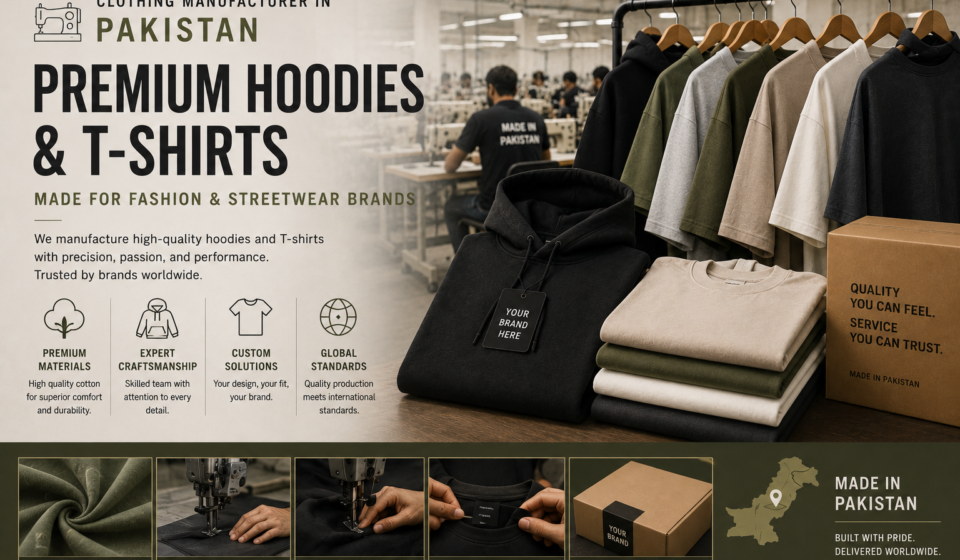
Manufacturers such as Loopback Apparel combine in-house textile expertise with modern apparel production, offering services like heavyweight hoodies, premium T-shirts, embroidery, puff printing, garment dyeing, private labeling, and custom packaging. Because production is supported by an integrated manufacturing process, brands can often streamline development from fabric selection through finished garments.
Rather than simply producing clothing, this type of partnership allows founders to focus on building collections with consistent quality and brand identity.
Final Thoughts
Learning how to choose a clothing manufacturer in Pakistan isn’t about finding the factory with the lowest quote. It’s about identifying a production partner that understands your standards, communicates openly, and can support your brand as it grows.
The best manufacturing relationships are built on transparency, consistent quality, and shared long-term goals. When you invest time in selecting the right partner, you’re also investing in your brand’s reputation.
Frequently Asked Questions
Why do clothing brands manufacture in Pakistan?
Pakistan offers a strong textile industry, high-quality cotton, competitive production costs, skilled labor, and vertically integrated manufacturing, making it a popular sourcing destination.
How do I verify a clothing manufacturer in Pakistan?
Request samples, ask for production photos or videos, verify certifications if applicable, review past work, and communicate directly about production capabilities and quality control.
What is the minimum order quantity for clothing manufacturers in Pakistan?
Minimum order quantities vary by factory and product. Some manufacturers support startups with low MOQs, while others specialize in larger wholesale production.
What products are commonly manufactured in Pakistan?
Pakistan is well known for producing T-shirts, hoodies, sweatshirts, sportswear, knitwear, denim, workwear, and private-label apparel.
Is Pakistan good for premium streetwear manufacturing?
Yes. Many manufacturers specialize in heavyweight cotton garments, oversized fits, garment dyeing, embroidery, puff printing, and other finishes commonly used by premium streetwear brands.
Continue Reading
Expand your sourcing knowledge with these related guides: