
Why Premium Streetwear Brands Are Moving Production to Pakistan
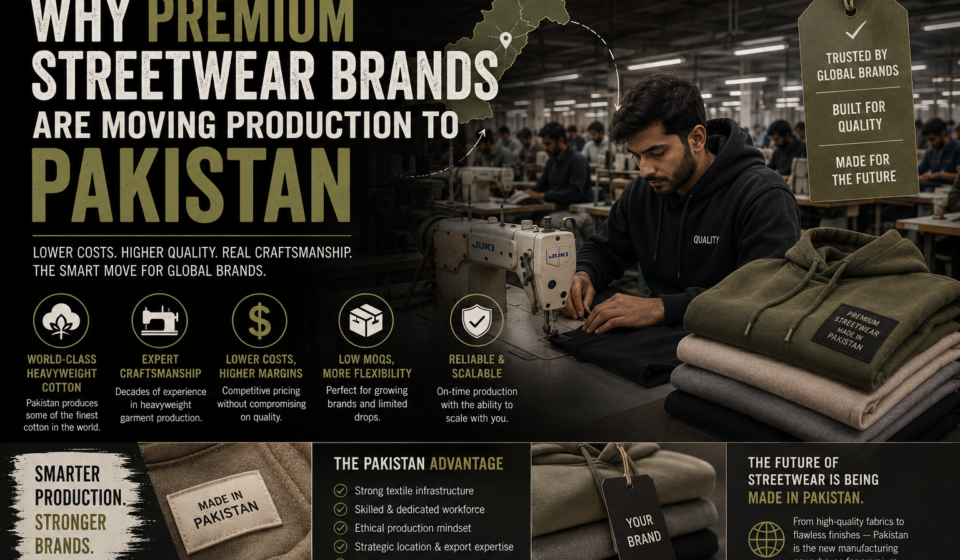
Streetwear manufacturing in Pakistan has quietly moved from a budget backup option to a serious contender for premium labels. What used to be a country known mainly for basic tees and denim now runs factories producing 400+ GSM heavyweight fleece, garment dye, puff print, and oversized construction the exact specs streetwear brands build collections around. The shift isn’t accidental. It’s the result of rising China costs, tariff pressure, and Pakistan’s own investment in fabric and finishing capability.
What’s Driving the Shift Toward Streetwear Manufacturing in Pakistan
The global streetwear market is projected to grow from roughly $347 billion in 2024 to over $637 billion by 2032, and that growth is pulling more sourcing teams into markets they hadn’t seriously considered before. Pakistan has benefited directly from this search for capacity outside China, particularly as US tariffs on Chinese apparel climbed toward the mid-30% range through 2025 and into 2026. For brands running heavyweight hoodie and fleece programs at scale, that tariff gap alone can be the difference between a healthy margin and a thin one.
At the same time, Pakistani manufacturers have closed a lot of the capability gap that used to push premium brands toward China or Portugal by default. Factories now offer French terry, fleece, and cotton-poly blends up to 450+ GSM, along with bio-wash and anti-pilling finishes that streetwear buyers expect from a “premium heavyweight” hoodie. That combination real fabric depth plus a meaningfully lower cost base — is the core reason producing streetwear in Pakistan keeps coming up in sourcing conversations that used to skip it entirely.
Heavyweight Fleece and Fabric Capability
Streetwear manufacturing in Pakistanlives and dies on fabric feel. A thin, flat hoodie doesn’t read as premium no matter how good the print is. This is where Pakistani factories have made their biggest leap: hubs like Sialkot and Faisalabad now routinely produce heavyweight fleece in the 380-450 GSM range, oversized and drop-shoulder silhouettes, boxy cuts, and custom-paneled designs that were once considered a China or USA-only specialty.
Decoration capability has kept pace too. Screen printing, DTG, DTF, embroidery, chenille patches, puff prints, and rhinestone work are now standard offerings rather than premium add-ons, which matters for streetwear brands whose identity is built as much on graphics and trims as on the garment itself.
Cost Efficiency Without the Full China Tariff Tax
Cost is still the headline reason Pakistani streetwear factories get a second look. Labor costs in Pakistan remain among the lowest of any major garment-exporting country, and that gap compounds with tariff exposure: Chinese apparel imports into the US now carry duties that Pakistani-made goods largely avoid at the same scale. For a brand running thousands of units a season, that difference shows up directly in landed cost per unit, not just on paper.
It’s worth being clear-eyed here cost efficiency isn’t the same as being the cheapest option on earth. Pakistan isn’t trying to undercut Bangladesh on basic tees. The pitch for streetwear specifically is a better ratio of fabric quality and finishing capability per dollar spent, which is a different calculation than pure unit-cost sourcing.
Low MOQs Make Streetwear Manufacturing in Pakistan Startup-Friendly
One underrated shift: minimum order quantities have come down sharply. A few years ago, most Pakistani factories were built around large wholesale runs. Today, a meaningful share of factories offer MOQs starting around 25-100 pieces per design, which opens the door for independent streetwear labels and early-stage brands that can’t commit to a 500-1,000 unit run just to test a silhouette or colorway.
This matters for how premium streetwear actually gets built. Most successful labels don’t launch with one safe hoodie they test multiple fits, fabric weights, and graphics in small batches before scaling the winners. The combination of low MOQs and heavyweight fabric capability fits that testing-and-scaling model better than markets built purely around bulk production.
The Trade-Offs Brands Should Know
None of this makes Pakistan a universal answer. Lead times can run longer than domestic US production, and quality consistency still varies significantly factory to factory a real risk for brands that haven’t built a vetting process. Compliance documentation and factory audits also require more diligence than sourcing from an EU-based supplier with built-in regulatory oversight. Brands sourcing streetwear from Pakistan for the first time should expect to request physical samples, confirm GSM and wash results in writing, and build in time for a proper sample-to-bulk approval cycle before committing to a full production run.
Where Loopback Apparel Fits In
Finding a factory that can actually deliver on heavyweight fleece, oversized fits, and clean puff print consistently, at the GSM and finish you specced is the part that trips up most brands moving into Pakistani streetwear production for the first time. That’s the gap Loopback Apparel works in, supporting both custom clothing manufacturing for brands with their own tech packs and silhouettes, and blank apparel for labels building on proven heavyweight base garments. Whether you’re testing a small-batch drop or planning a full seasonal collection, it’s worth walking through your specs with a sourcing partner before locking in a production run.
Resources for Further Reading
This shift toward Pakistan isn’t a trend brands are chasing blindly it’s a response to real changes in tariffs, fabric capability, and MOQ flexibility. For premium labels weighing where to build their next collection, it’s earned a place on the shortlist that it didn’t have a few years ago.